“People don’t buy what you do; they buy why you do it. And what you do simply proves what you believe”—Simon Sinek
This article lays out a practical medical branding strategy: how to earn trust, communicate “why,” and stop sounding like every other clinic.
The quote above holds the theme here: people don’t care about any brand, but what they care about is the purposeful endeavor of said brand.
We have a cognitive bias towards meaningful brands. We vouch for their success, we stay loyal and spread the gospel about them. That’s because they reflect our beliefs and reinforce our core characteristics.
Zooming out, this is one part of your broader healthcare branding .
In this article, we’ll go through how you’ll infuse a dash of “meaningful substance” into your medical business—and how that can lead to higher trust, preference, and loyalty.
By the end, you’ll have a clear internal foundation you can use to guide messaging, decisions, and brand direction.
Here’s what we’ll cover:
- The fact about how patients choose medical practices
- Why Messages Vs What Messages
- Brand DNA workshop
- Brand Golden Circle Exercise
- Brand Credo Write-up
- Brand Pillars Exercise
- Future Brand Exercise
- Brand Obituary Exercise
- Next Steps
Here’s a disturbing fact:
The degree of trust your patients feel towards your service, rather than the assessment of its features/benefit, will determine whether they’ll buy your service or the other services.
Why is that disturbing? Well, how many times you’ve heard the following marketing messages:
- “State of the art medical equipment.”
- “Data-driven approach to healthcare.”
- “Complete care suite of services.”
- “Cutting edge healthcare technology.”
- “Affordable healthcare costs.”
The problem with this kind of communication is that it assumes that the patient’s choice is based on rationality and assessment of features, which is simply wrong. Again buying decisions in such serious matters as our health are not rational but based on trust.
No one would choose a provider they don’t trust, even if they have the fanciest medical tech stack or cheapest price in town.
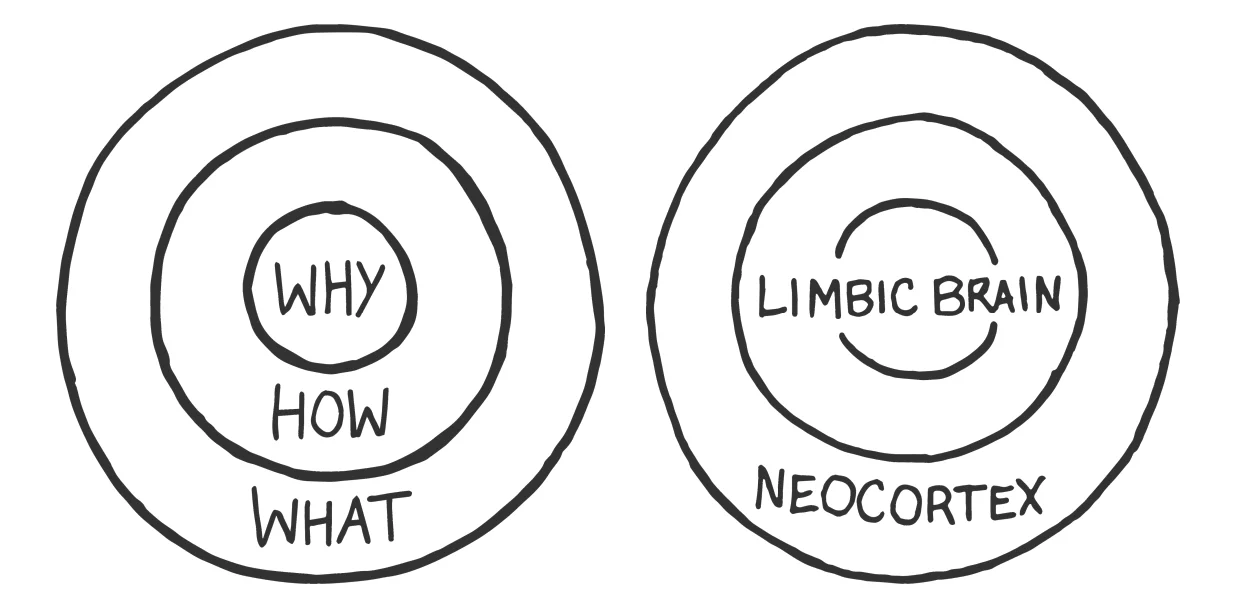
In his book, Start With The Why, Simon Sink refers to the above type of messages as a What Message (WM). A message that describes what the service is and its features.
What Messages are perceived by the neocortex, the part of the brain that’s responsible for logical thinking. For example, let’s say you’re in the process of buying a pen. A What Message (a message that emphasizes the features) will work great, and you’re probably going to assess the pen’s features before you buy it. That’s because the decision size is small, and trust isn’t needed that much to “lubricate” the sale.
However, when it comes to healthcare, the decision size is much bigger and trust is needed for patients to choose the provider.
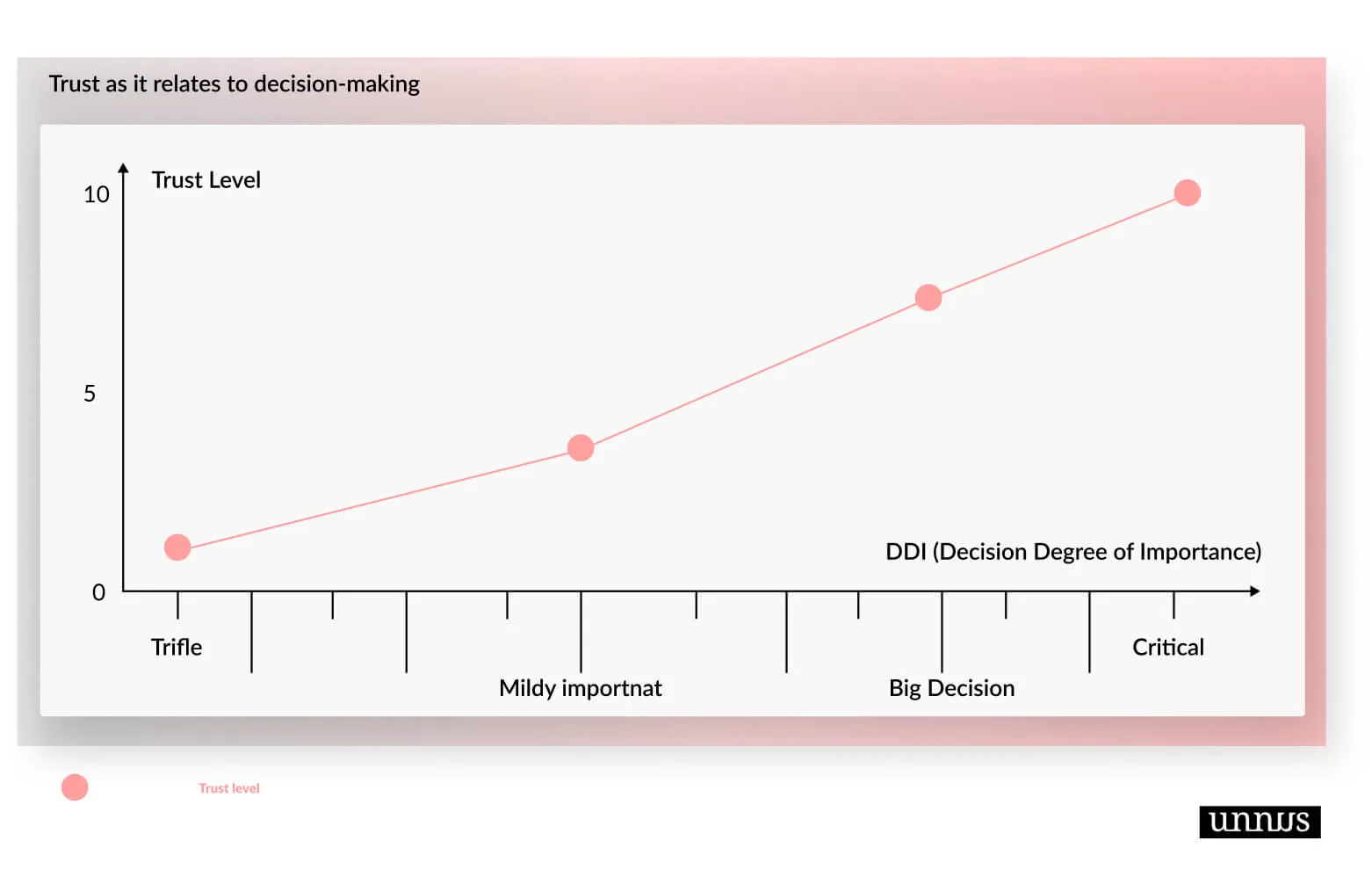
In such serious matters, a more effective way of messaging is Why Messages (WYM): Messages that are trust-signaling and carry a high sense of purpose.
And because Why Messages are emotional and speak directly to our limbic system, the part of the brain that’s responsible for emotional responses, they are 10x more impactful in attracting people.
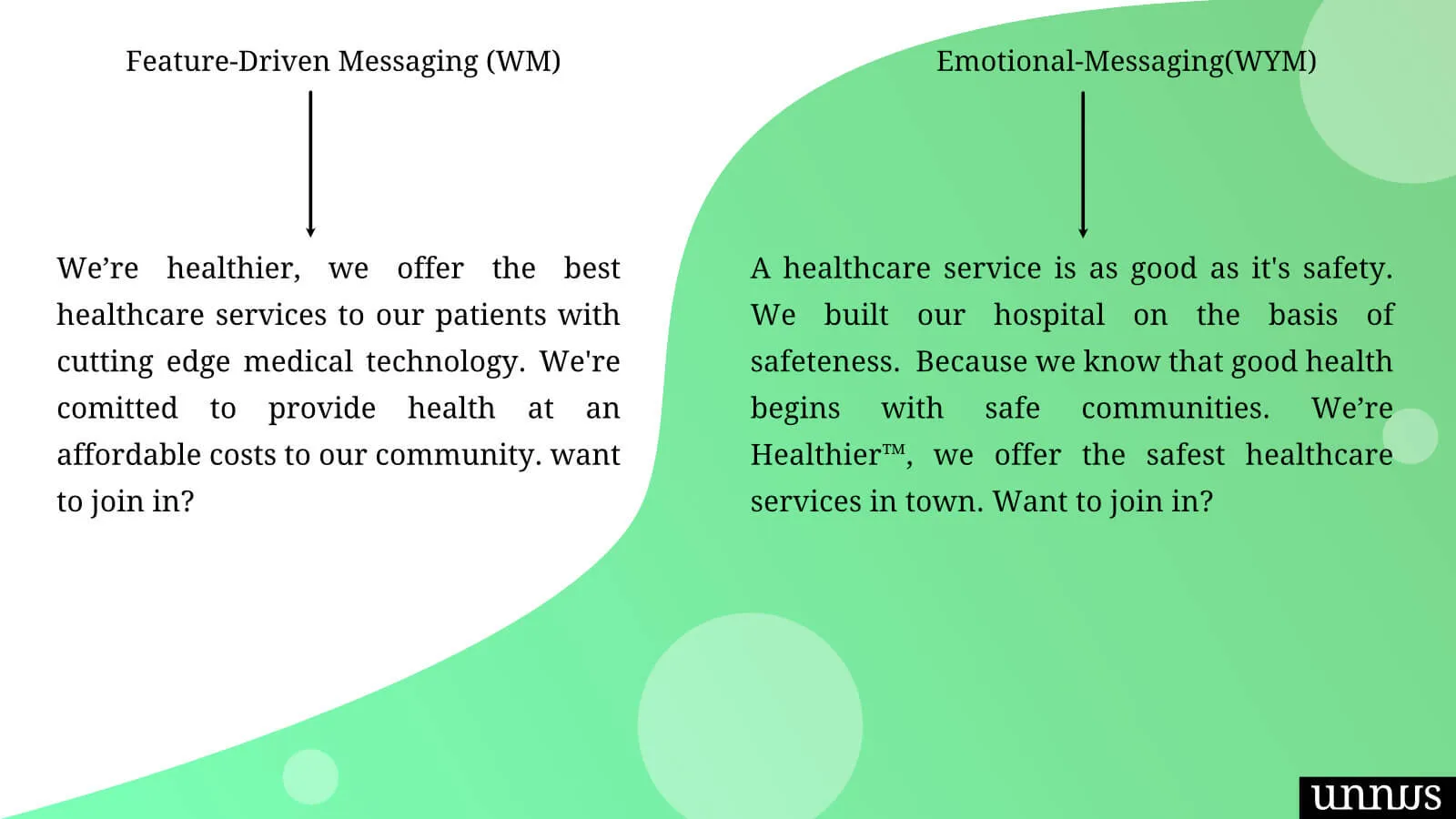
Examples of Why Messages VS What Messages
Here are some examples of feature-driven messages vs meaningful messages:

Brand DNA Workshop
Now we understand why purposeful brands attract loyal patients, let’s go into how you’ll infuse meaningful attributes to your medical brand.
In this workshop, we’ll go over the step-by-step process of how to transform your practice to be purpose-oriented. Brand DNA workshop consists of 4 branding exercises that focus on infusing purpose to your brand.
The goal here is to uncover your brand’s Why (the reason it exists) and then articulate it in a novel manner. A manner that will resonate with your target patient.
You can conduct these exercises with your team online or on-site. I’ll use the virtual aspect for the sake of convenience but it should be the same process in a physical location.
Quick Prep:
We’re going to use virtual boards to run this workshop online. And the best tool I use with my clients is miro . It’s an online tool that allows you to collaborate with your team on a virtual whiteboard. It offers handy features like sticky notes, voting dots, and meeting rooms.
First, you need to sign up for a free account and then click here to access the branding exercises.
I made a quick video that explains how to use this tool:
1) Brand Golden Circle Exercise ⏰ [15-25 minute]
In this exercise we’ll brainstorm the following:
- The Why:
- The reason why your medical business exist and what’s the purpose behind it
- The How:
- How are you going to fulfill that reason or your brand’s end goal? And how will that benefit your patients?
- The What:
- What does your brand do? And how does that relate to your patients’ day-to-day life?
The end goal is to formulate the answers as a Brand Credo, a statement of the beliefs which guide your brand’s actions and communications.
Let’s start.
#~Step 1) brainstorming the Why:
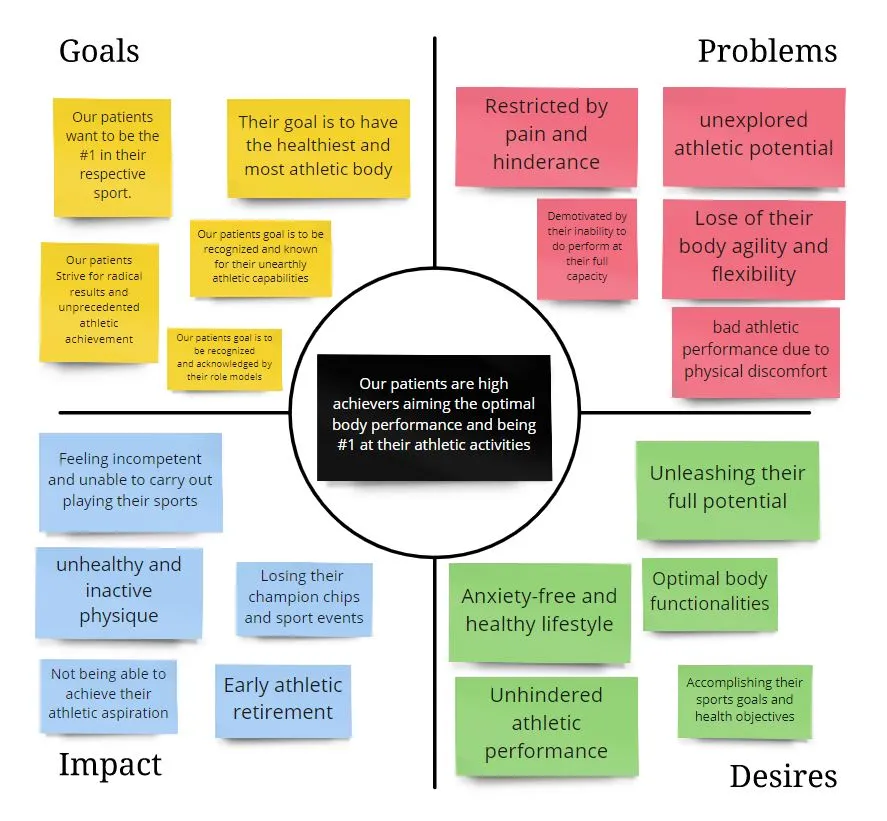
On the Why circle, you and your team try to think as to why the brand has come to fruition. What’s the purpose behind its existence and why should people care?
Take a couple of minutes to think and write down on sticky notes your answers. After that, pin the sticky notes to the Why circle.
Here’s a couple of questions to give you a headstart:
- Who are we helping?
- What are we helping them with?
- What Emotion do we want our target audience to have with the result we deliver?
- How could this emotion impact their lives?
- Does this have a knock-on effect elsewhere in their lives?
- How does this knock-on effect impact them practically?
- Based on what we do for our patients, what is the biggest impact we can have in their lives?
These questions will help you extract the essence of your brand. Make sure to avoid generic answers like “to treat people or to make people healthier”. Ask yourself, Who are the people I want to treat? And WHY do I want to treat them or/ make them healthier?
This will give you more interesting answers.
#~Step 2) brainstorming the How:
In this section, we look at how your brand is going to fulfill the purpose of its existence and how that can benefit your patients. And what’s the difference in the way you deliver care.
On the How Circle, brainstorm the ongoing commitments your brand has to do to achieve its higher purpose.
Here are questions to ask yourself and your team:
- How are we going to achieve our end objective? And What are the day-to-day commitments that enable us to reach our goal?
- What’s the difference in our method of delivering care?
- How could this benefit the patient?
- How can we implement an action plan for our commitments?
# Note
you must be specific and actionable about the How. Avoid non-practical statements like “To provide patient-centric care” or “delivering personalized care”. Be specific as possible.
For example: instead of saying “we provide convenient care”, try to be more elaborate like “we invest in the latest technology for faster healing and same-day care”. This way it’s more clear how you’re going to help the patient.
Remember, this process is internal for the moment. Public-facing messaging comes later—after you’ve clarified your positioning and voice. For now, you are free to write down what comes to your mind.
#~Step 3) brainstorming the What:
This is the easiest part of the exercise. Here, we try to lay down all of your services (or products) and their features. On the What Circle, write down descriptions of your brand and the answers to the following questions:
- What does our brand do?
- What are the features we provide to our patients?
- What are the things that we do or provide that other competitors don’t have?
- Describe your brand in 2 sentences
- Are there any perks or bonuses the patient gets out of being treated by us?
After you finished, your board will look like this:
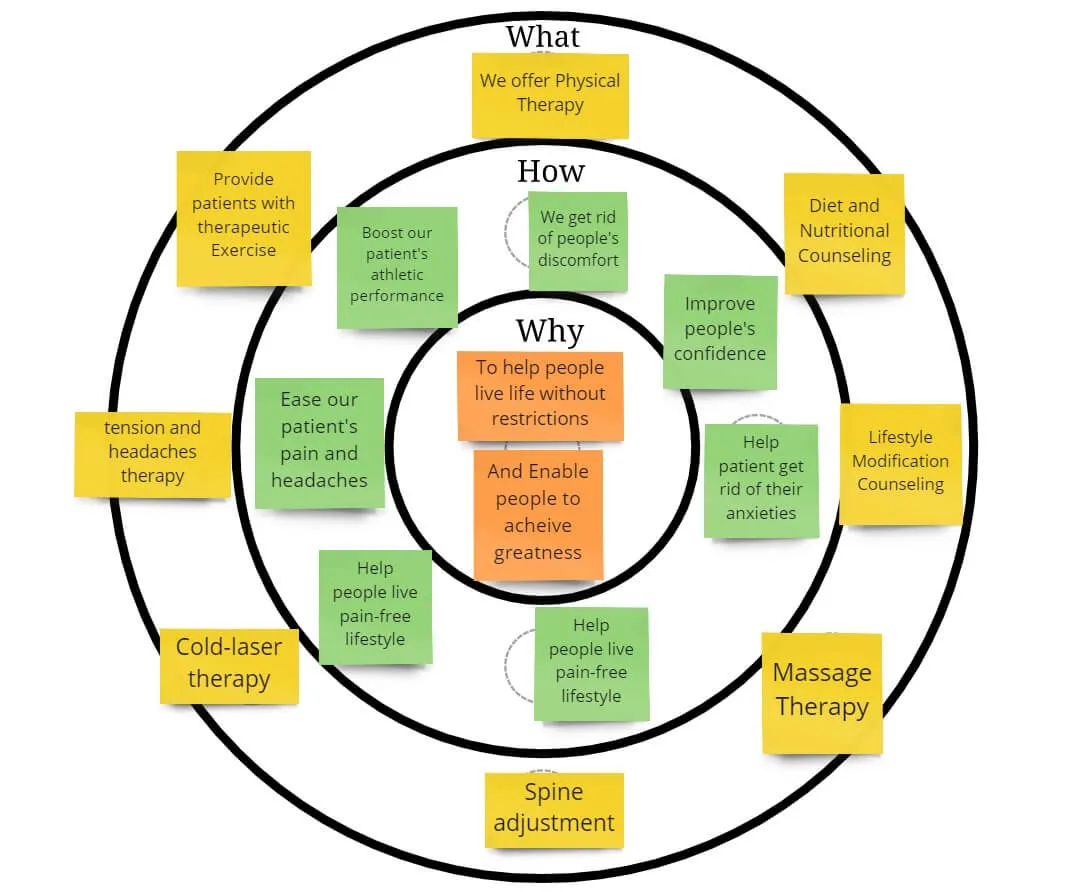
Now that you have a strong idea of your brand, move on to the next exercise where you will consolidate your understanding.
2) Brand Credo Write-Up ⏰ [15-25 minute]
In this exercise, we aim to solidify our understanding of the brand’s golden circle. And we do this by writing a Brand Credo. A Brand Credo is a short statement that declares the philosophy and the principles that guide your brand.
From this credo, everything will branch out. Every communication, interaction, future decisions, projects, and partnerships, will be vetted against this credo. It will act as a filter to any aspect of your brand.
In the branding workshop, move onto the Brand Credo Exercise.
Each participant will have a blank paper where he or she can write down the credo. You can duplicate the papers for more people to use by selecting a paper then hold the Alt or ⌘ key while dragging it.
Here’s the basic template of a Brand Credo:
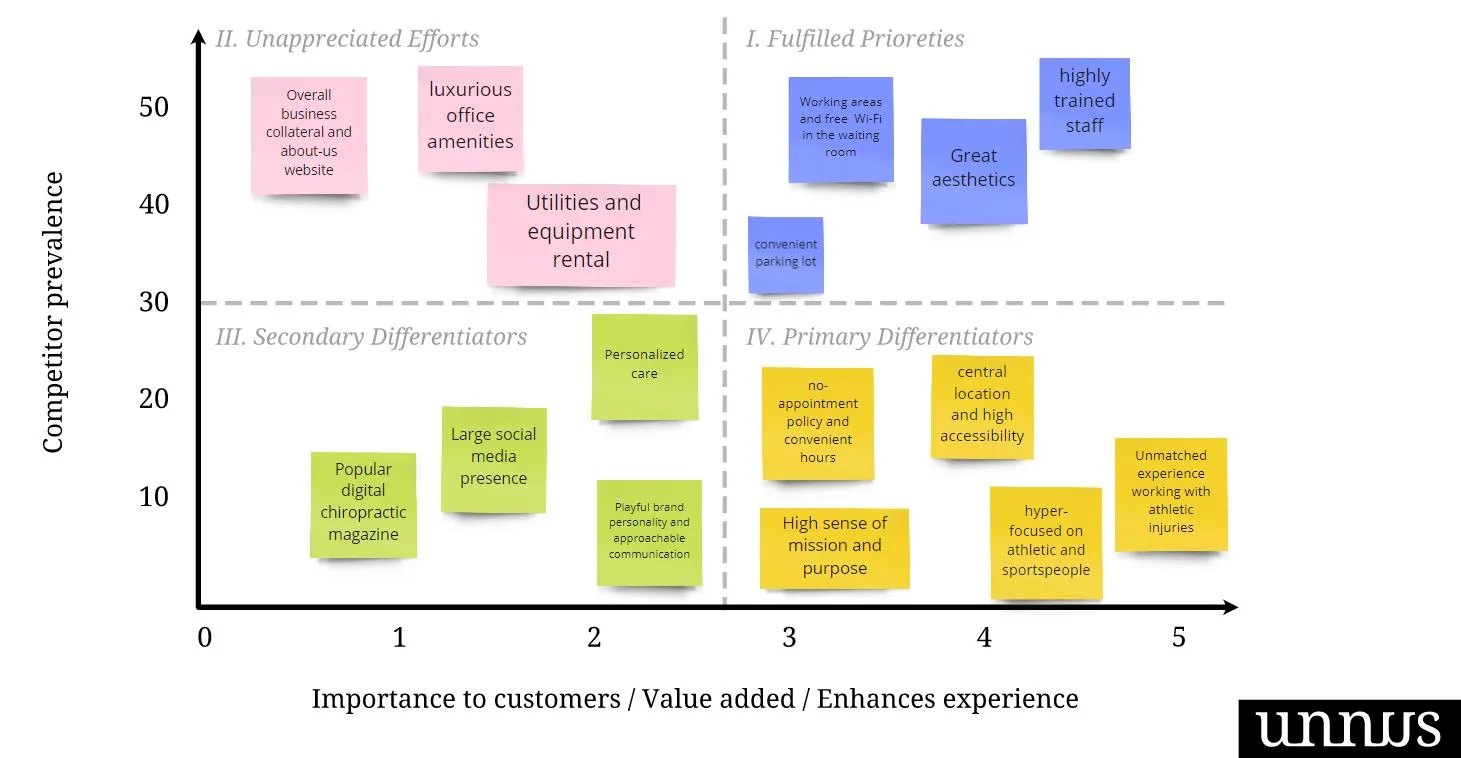
Take 10-15 minutes and let the participant write their version of the credo. To help you write one here are some tips:
- In the first paragraph, write down why the brand exists. Go back to the Golden Circle and see the reasons behind the brand. It should give you an idea of what to write.
- In the second paragraph, write down how the brand is going to fulfill its promise. Here where you collect all of the How’s from the previous exercise and make a coherent statement
- The last paragraph is where you describe your brand and what it does. Keep it short and sweet.
Your brand’s credo shouldn’t look like a generic and uninspiring mission statement. The Credo should be different, powerful, and hard-hitting.
Here are some examples for inspirations:
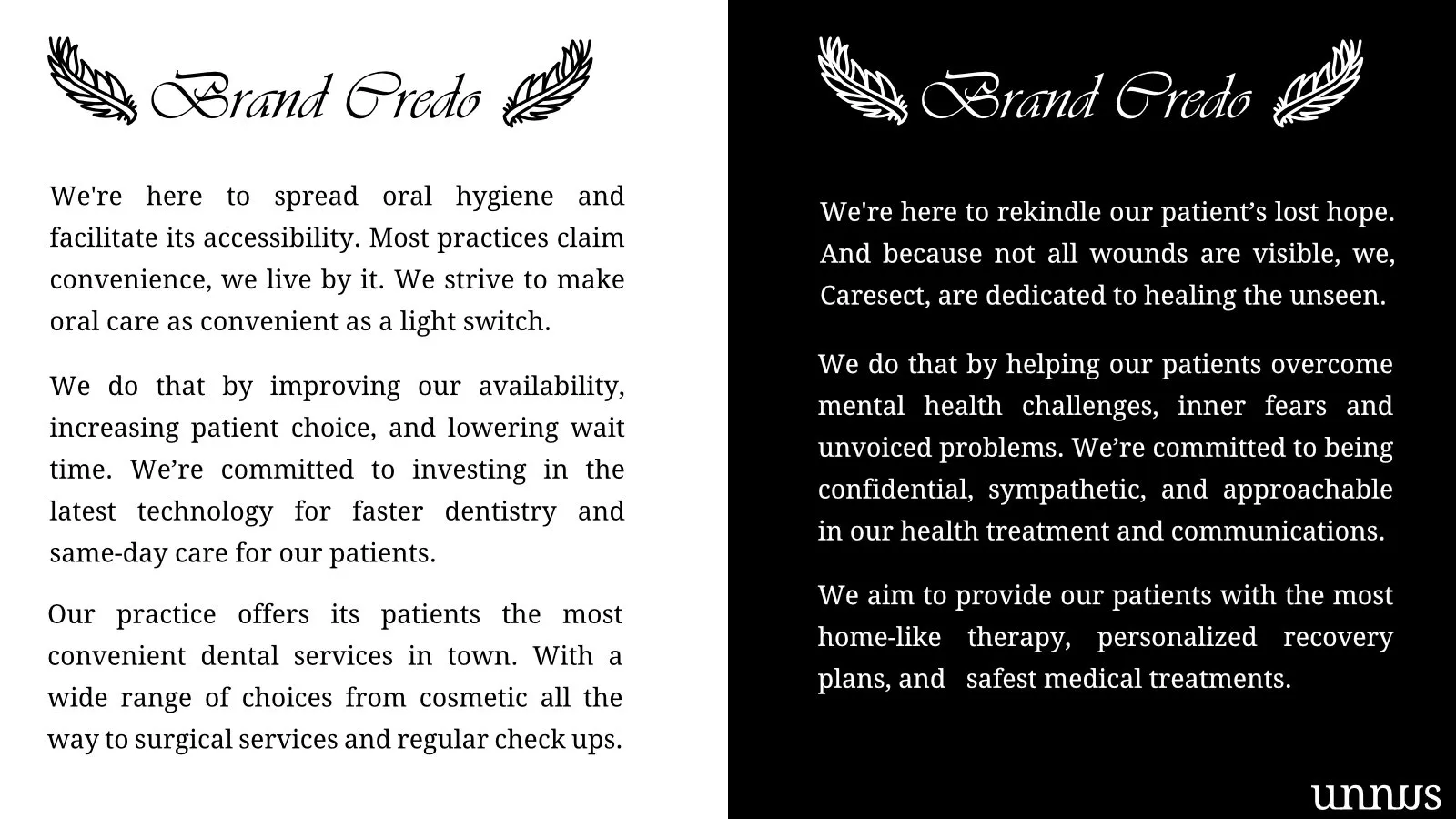
After you finish writing the credo, using the red voting above the exercise in miro, vote for what you think is the best credo that truly represents the brand.
Each participant vote counts as 1 point while the founder/owner’s vote counts as 2 points.
The highest-rated credo is the winner.
3) Brand Pillars ⏰ [10-20 minute]
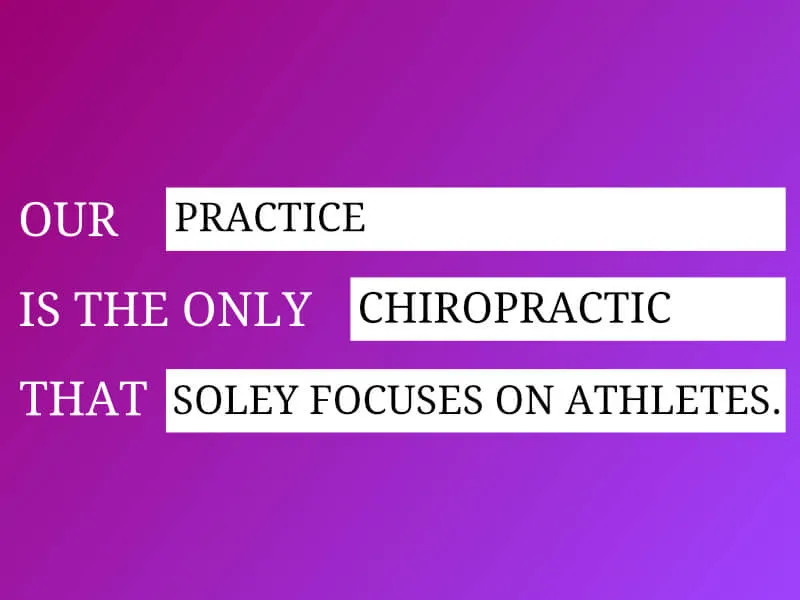
In this exercise, you’re going to jot down your Brand’s Pillars. Brand Pillars are a set of guiding principles that shape every aspect of your business. They’re placed at the very core of your brand and are there to dictate your brand message, identity, and personality.
These pillars will stem from your brand’s credo. The goal here is to reduce the philosophy of your credo to one or two words so we end up with a shorter & purified version.
Using the Brand Pillars exercise, write down on sticky notes the brand’s principles. Go back to the previous exercises to take inspiration and try to reduce the statements to one or two words.
Every brand pillar should pass the following questions:
- Can we hire or fire staff based on this pillar?
- Can we open new locations or subsidiaries without contradicting this pillar?
- Can we decide on partnerships/mergers based on this pillar?
- Can we add or remove services without being unfaithful to this pillar?
- Is there a double edge effect on our brand if we choose to adopt this pillar?
In the exercise, there are four brand pillars. From our experience, we’ve seen that more than four will lead to confusion or diluting the brand’s meaning. So it’s best to limit it to 4 as max and 2 as a min.
For each brand principle, the team can brainstorm values and philosophies and pin them to their respective pillar.
After that, using the voting dots, vote for the best guiding principle with each participant vote count as 1 point and the leader/owner’s vote as 2 points.
The highest-rated principal will be considered a Brand Pillar.
Your result should end up something like this:

Important: again, try to avoid the generic use of common values like honesty, quality, accountability, and so on. While these values are admirable, they are overused and do not differentiate your brand. If one of them is truly one of your brand’s beliefs, that’s okay to add it. But that should be the exception rather than the rule.
4) Future Brand ⏰ [15-25 minute]
The word “vision” is tossed around a lot in healthcare. But most corporate visions/missions are used as a superficial decoration rather than an actual plan to follow.
Many medical businesses copy the dull and uninspiring vision statements and paste them to their website as a “nice to have” kind of antique. This is a waste of time and opportunity.
Because without a shared understanding of the overarching goal you’re trying to accomplish, you might grab at short-term gains while incurring the long-term loss of your brand’s identity.
And this exercise aims to combat that. We’re going to sketch a rough future for your brand and how it will look like years from now. The goal here is not to predict the future but to establish a loose structure.
By establishing such objectives, you’ll know exactly where your brand is heading and how you’ll arrive there.
Let’s start.
#~Step 1) Future Brand Timeline:

On the branding workshop, move on to the Future Brand Timeline and follow the next 3 steps:
- Take 15 minutes to move on through the timeline: use sticky notes and pin your writings on the timeline.
- (Now): where are you now? In terms of business metrics — what’s your practice size, patient base, lifetime value, and so on
- (5 years) Where do you see your medical brand in 5 years in terms of growth?
- (10 years) If you achieve all your goals in 5 years, then What will your practice look like in 10 years? How big will it be? and what other care services could you offer? Will you expand to other locations or add other service lines?
- (15 years) What impact will you have on your industry in 15 years? How will your brand expand?
- Next, in the aspiration field, Take 5 minutes to write down your ultimate aspiration. If it all goes right, how will you impact the field you’re in? Here you can use superlatives like “The world’s (safest, most loved, most convenient…)”
- Finally, define your ideal future state — your final destination or desired end state. What would the world look like if this problem was solved? If you were successful in what you do, how will your medical brand change its community? (make it simple and concrete, and avoid any jargon)

Share and discuss the notes and the writing with your team and move on to the next part of the exercise.
#~Step 2) Future Vision Statement:

Here we’re going to formulate a vision statement for the brand using the findings from Future Brand Timeline.
On the candidates’ quadrant, use sticky notes to write your candidates’ vision statement. Use the Future Vision Statement template on the left to nail the format of the statement.
Try to fill in the gaps using the result from part 1 of the exercise.
After you brainstorm as many statements as possible, participants should use the red voting dots to vote for the best statement.
The highest-ranked statement is the winner.

5) Brand Obituary ⏰ [15-25 minute]
What will happen if your medical business closes its door tomorrow?
Would journalists write headlines heralding your past achievements, or would their stories simply add you to a list of bygones?
Would staff wonder how it could have ended, or would they have known it was inevitable?
Would patients mourn your passing, or would the demise of your brand go unnoticed?
This creative exercise aims to contrast the previous one. It’s good to set goals for the future but it’s equally as good (if not better) to be proactive and work backward to check if your brand will pass the test of time.
The Brand Obituary exercise aims to force you to think through some of the key elements that make up a charismatic medical brand.
The goal here is to write an obituary for your brand denoting its last days.
The exercise is not meant to dishearten the staff members or your leadership team. It’s simply to extract critical aspects of the brand and to get a razor-sharp picture of its trajectory.
Write down the obituary of your brand as if it were a person who just died yesterday.
Each participant should think of themselves as the journalist who has to report on the accident.
Much like writing the brand credo, each team member will have a paper to write down the obituary.

Things you need to include in the obituary:
- What will patients remember it for?
- Who did your practice leave behind?
- What did your brand leave unaccomplished?
- Who will mourn or miss your brand, and why?
- What lessons can be learned from the brand’s life?
- What can be learned in the wake of its death?
- Now that the brand is gone, what will take its place?
At the end of the exercise, discuss each other’s obituary and see what insights you can gather about your brand.

End the workshop ⏰ [5-8 minute]
Now that we finished the Brand DNA workshop, it’s time to provide the team with a bird’s view of what they’ve accomplished. Offer a quick recap to everyone and inform the participant of what’s coming next.
If you run the workshop in person, make sure to convert the exercises and notes into a digital format. This will make it more accessible when you need to pull information later on.
Okay, we’ve completed the workshop, now what?
Next, you’ll take what you clarified internally and translate it into a focused position in the market.
Part 1 of 6: Healthcare Branding Series
You’re reading Part 1 of a 6‑part series on building a medical brand people trust (and choose).
If you want to keep the thread:
- Next: Healthcare brand positioning
- Jump ahead: Humanizing healthcare brands
- Or start a project: Contact